
How Gutter Damage Can Put Your Roof at Risk
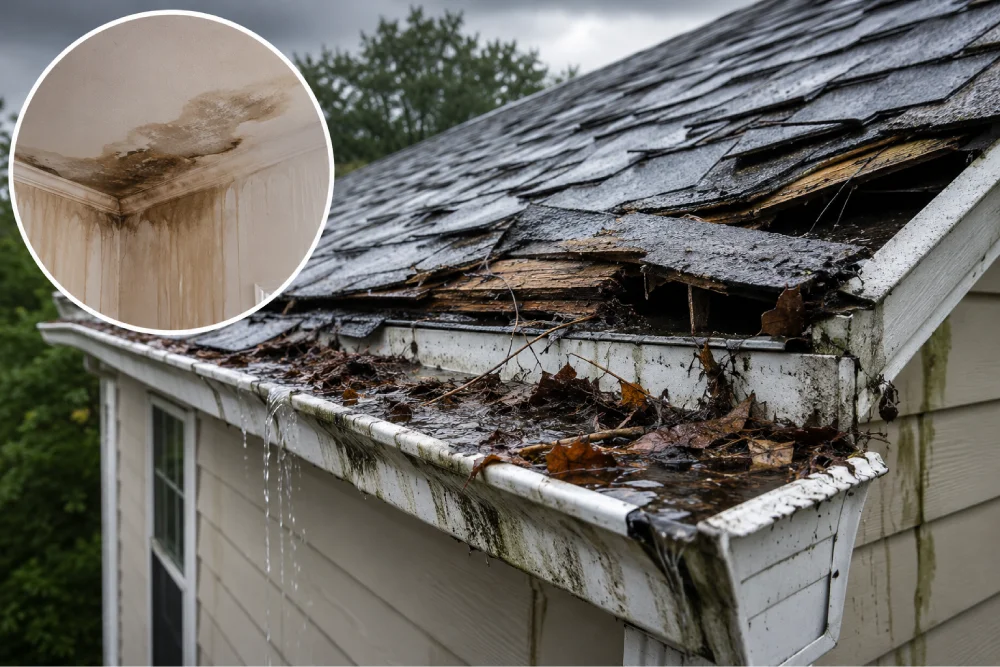
Most people don’t think much about their gutters. They’re just those metal channels around the edge of your roof, right? But here’s the thing — gutters do a much bigger job than most homeowners realize. When they stop working properly, the damage doesn’t stay in the gutters. It spreads — quietly and slowly — until your roof, your walls, and even the inside of your home start paying the price.
The good news? This is one of the easiest home problems to prevent. You just need to understand what’s happening and take action before things get out of hand.
What Do Gutters Actually Do?
Your gutters have one main job: collect rainwater and melting snow from your roof and carry it safely away from your home. That’s it. Simple enough.
But when they can’t do that job — because they’re blocked with leaves, cracked, sagging, or pulling away from the roof — that water has nowhere to go. So it sits. It backs up. It overflows. And it starts finding its way into places it should never be.
Think of it this way: your gutters are like a drain in your kitchen sink. If the drain is blocked, water doesn’t just disappear — it builds up and eventually causes a mess. Your gutters work the same way, except the “mess” can mean thousands of dollars in roof and structural repairs.
Five Ways Bad Gutters Damage Your Roof
1. Water Gets Under Your Shingles
When gutters are clogged or broken, water spills over the edge and collects along the bottom of your roof. Over time, this water works its way underneath your shingles — the flat, overlapping tiles that cover your roof.
Once water gets under those shingles, it soaks into the wooden boards beneath them. Those boards start to rot. The shingles themselves begin to crack, lift, and fall apart. In winter, this gets even worse. Water that seeps under shingles can freeze overnight and expand, forcing the shingles apart even further. This cycle of freezing and thawing causes serious damage very quickly.
2. The Wood Behind Your Gutters Starts to Rot
Take a look at where your gutters are attached to your house. Right behind them is a long wooden board called the fascia. Just above that is another section called the soffit. Both of these are made of wood, and both of them are constantly getting wet when your gutters overflow or leak.
Wood and constant moisture don’t mix well. Over time, the fascia and soffit begin to rot. Once the rot sets in, it doesn’t stay in one place — it spreads inward, weakening the very structure that holds your roof up. What started as a gutter problem has now become a structural problem, and that’s a much more expensive fix.
3. Ice Dams Form in Winter
This one is especially important if you live somewhere that gets cold winters. Here’s what happens:
Snow builds up on your roof and slowly melts during the day. That water runs down toward the edge of your roof, where it’s supposed to flow into your gutters and drain away. But if your gutters are clogged, the water can’t go anywhere. At night, when temperatures drop again, that water freezes right at the edge of your roof.
This buildup of ice is called an ice dam. As more snow melts and more water tries to drain, it gets blocked by the ice dam and has nowhere to go — except back up under your shingles. The water then leaks into your attic and, eventually, into your ceilings and walls. Ice dams can cause serious water damage inside your home, and they all start with gutters that aren’t draining properly.
4. Mold and Moss Start Growing on Your Roof
Moisture trapped near the base of your roof creates the perfect conditions for mold, algae, and moss to grow. These aren’t just ugly — they’re actively harmful.
Moss, for example, holds water against your roof surface like a sponge. The longer it sits there, the more it breaks down your roofing materials. Algae can cause dark staining and eat away at the protective coating on your shingles. Mold can spread into your attic and affect the air quality in your home.
Many roofing warranties will actually become invalid if mold or algae growth is left untreated. So not only are these things damaging your roof — they could also cancel any warranty protection you were counting on.
5. Heavy Gutters Pull Away and Create New Problems
When gutters fill up with wet leaves, twigs, and debris, they get very heavy. That extra weight puts strain on the brackets holding them to your roof. Eventually, the gutters can start to pull away from the house, leaving gaps between the gutter and the fascia board.
Water then runs directly down the side of your home instead of through the gutter system. This causes staining, rot, and damage to your exterior walls. During heavy rain, water also splashes back onto the roof edge, adding to the moisture problem at the very spot you’re trying to protect.
How Do You Know If Your Gutters Are Causing Problems?
You don’t always have to climb a ladder to spot the warning signs. Here are some things you can look for from the ground:
Water stains on your walls. If you notice brown or dark streaks running down the outside of your home — especially below where the gutters sit — that’s a sign water is overflowing where it shouldn’t be.
Gutters that are sagging or separating. If part of your gutter is drooping or you can see a gap between the gutter and your roofline, it’s not draining properly.
Paint that’s peeling or rust on the gutters. These are signs of ongoing moisture issues and age-related wear.
A musty smell in your attic. If your attic smells damp or musty, that’s a red flag. It could mean water has already been getting in, and mold may be starting to grow.
Prevention Is Much Cheaper Than Repair
Here’s the most important thing to understand: fixing a gutter problem early is far less expensive than dealing with the damage it causes later.
A professional gutter cleaning and inspection typically costs a small fraction of what you’d pay for roof deck replacement, mold remediation, or interior water damage repairs. By keeping your gutters clean and in good working order, you’re protecting one of the biggest investments you’ll ever make — your home.
The general recommendation for gutter cleaning is:
- Once or twice a year for homes with few trees nearby
- Three to four times a year for homes surrounded by trees
- After any major storm, regardless of your normal schedule
- Every season if your roof is already showing signs of wear or damage
When in doubt, it’s always better to have someone take a look. A quick check today could save you from a major bill six months from now.
Start Protecting Your Roof From the Gutters Up
At Clean on Demand, we do more than just clear out the leaves. Our team checks for sagging, improper slope, loose brackets, early signs of rust or cracking, and anything else that could cause problems down the line. We make sure your gutters are doing the job they’re supposed to do — so your roof stays protected through every season.
Don’t wait for a leak in your ceiling to tell you something went wrong. Take care of your gutters now, and your roof will thank you for years to come.
Contact Clean on Demand today to schedule your gutter inspection — and keep your home protected from the top down.
Need a Cleaning Quote? Let's Talk!
Fill in your details and our team will get back to you shortly.


